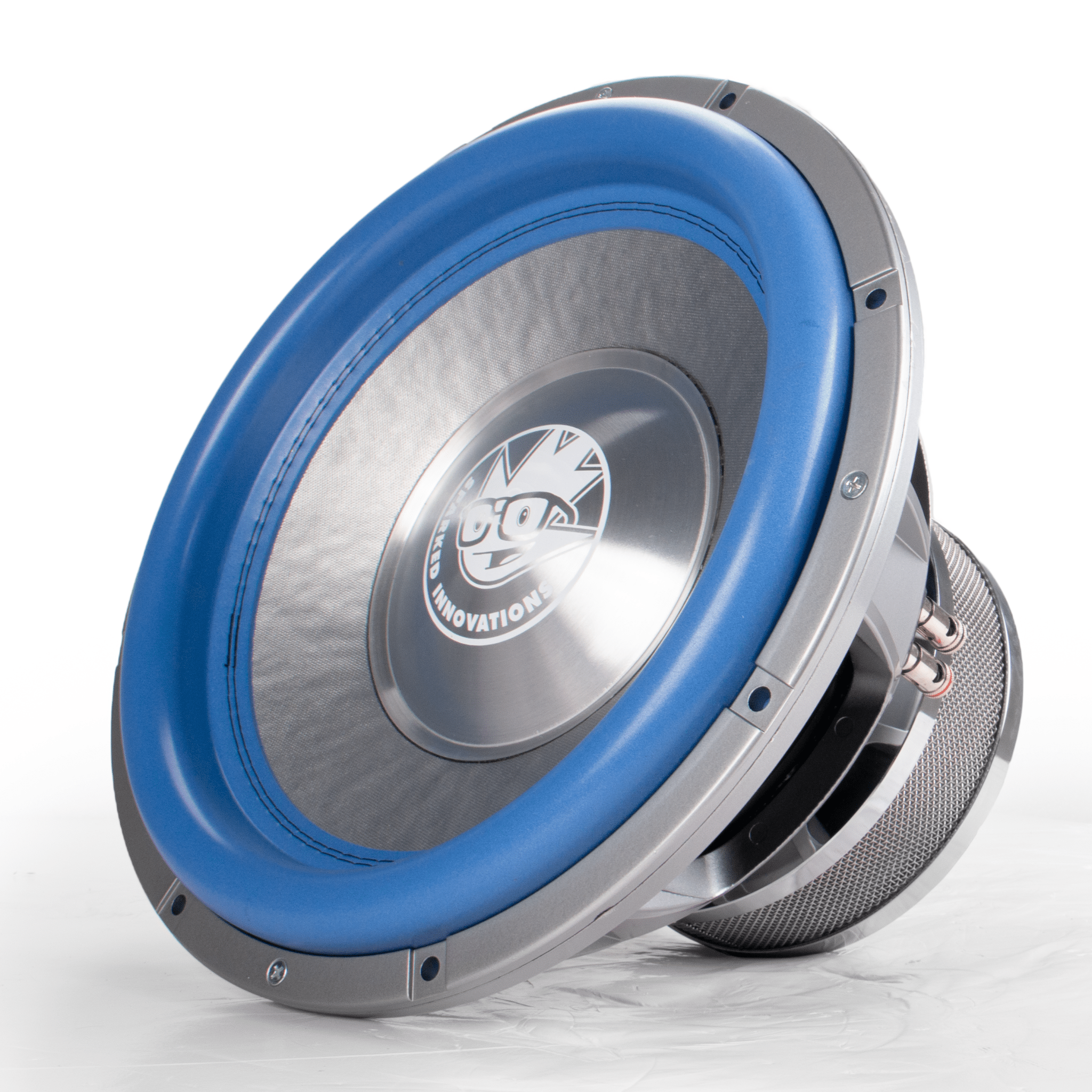
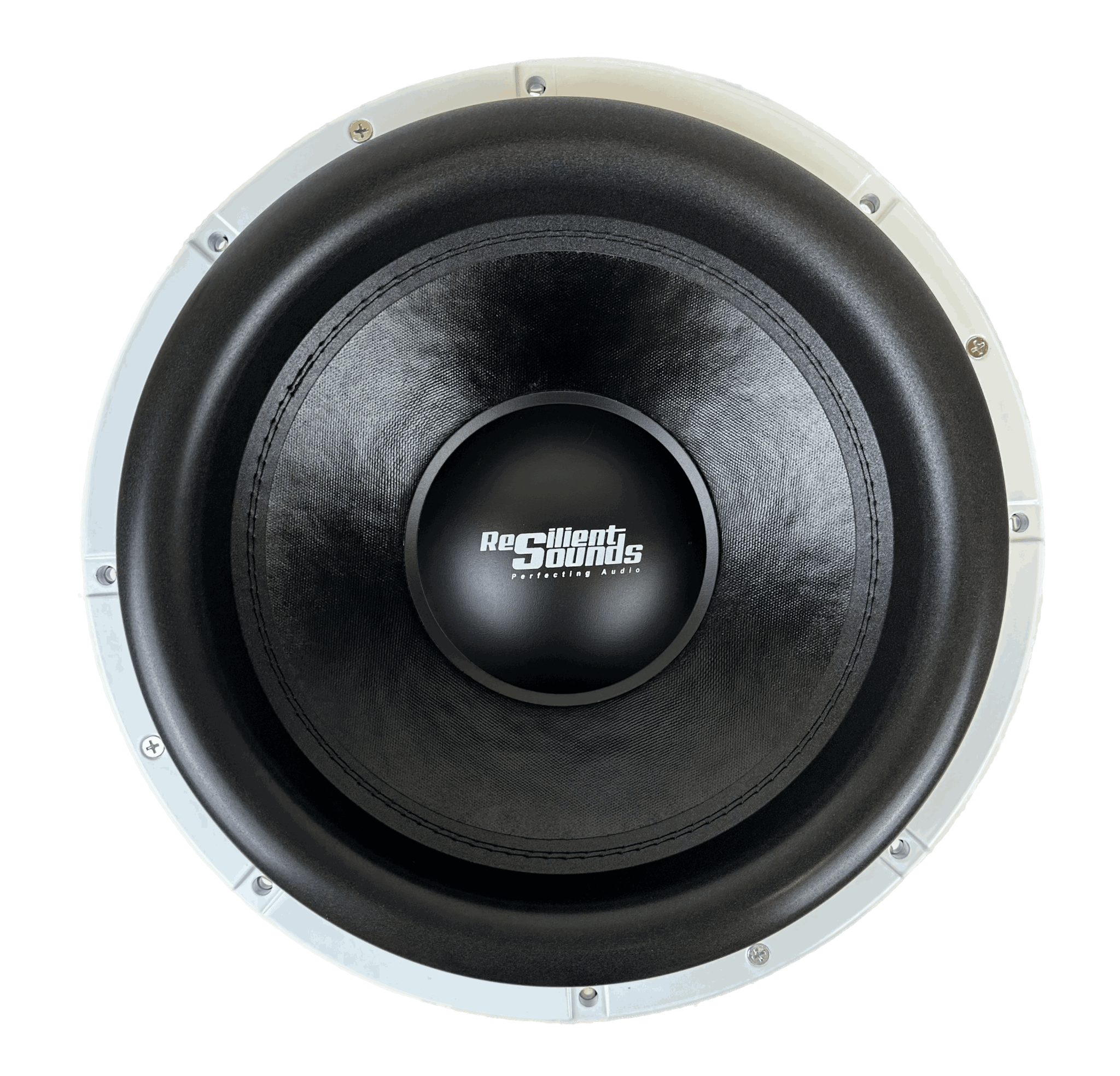
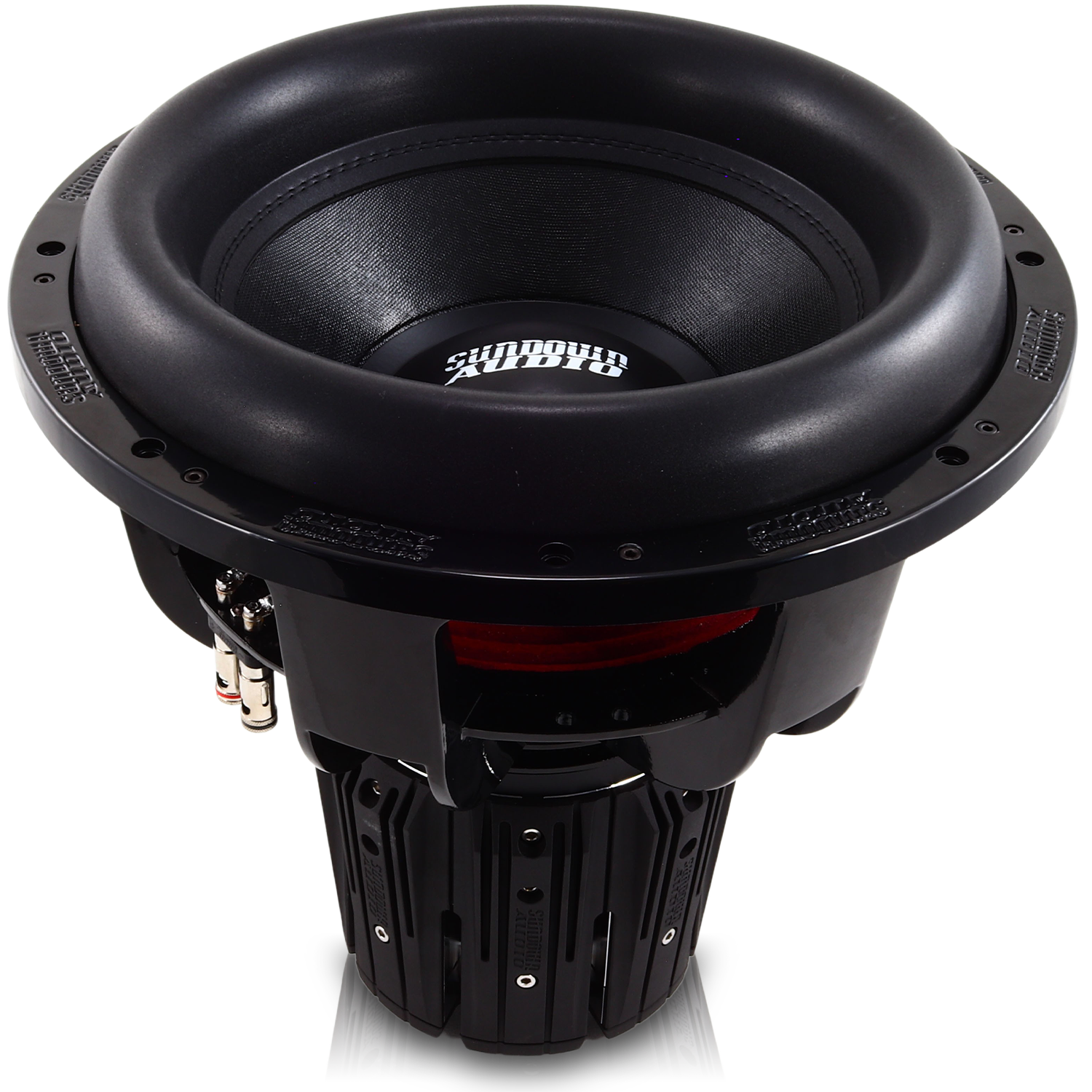
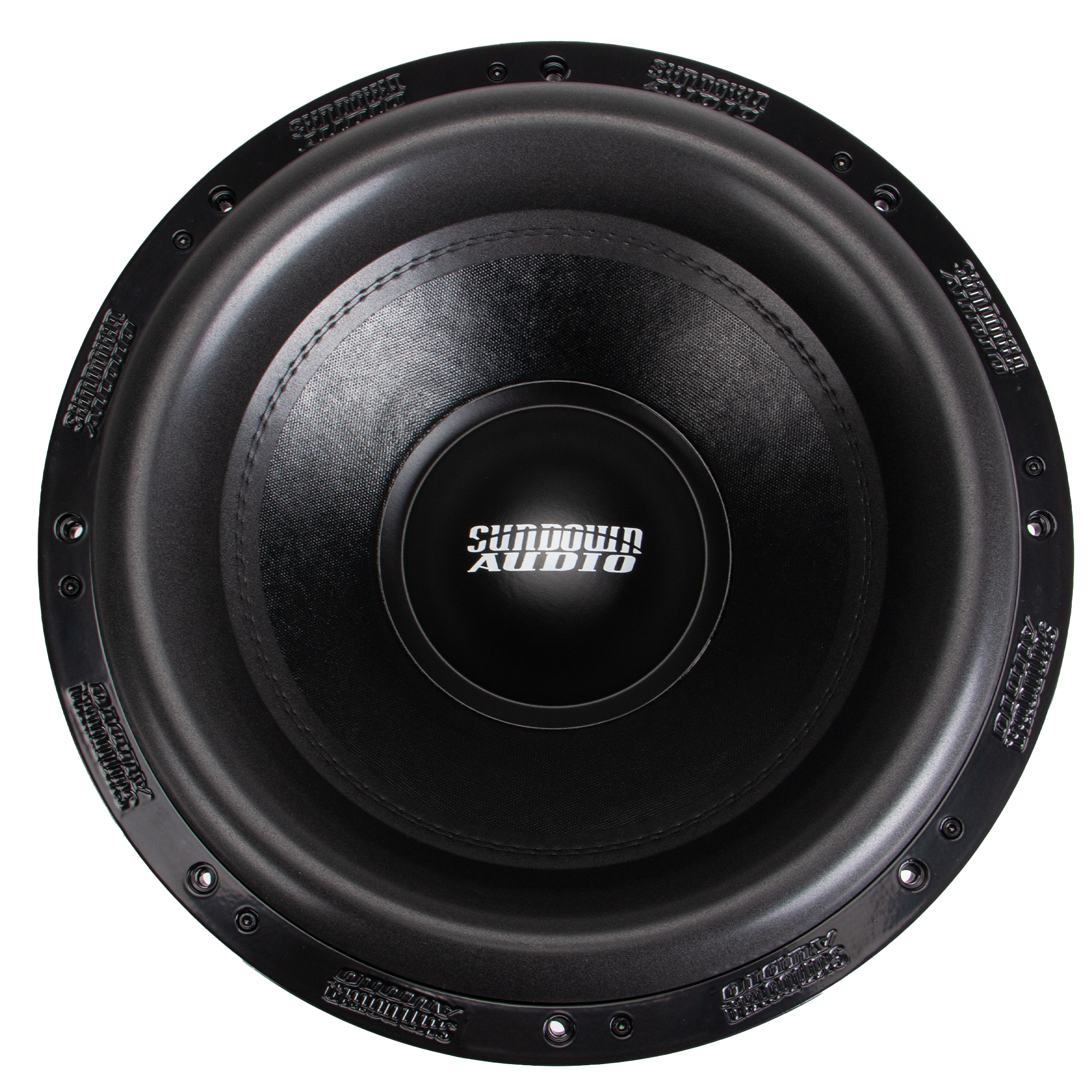
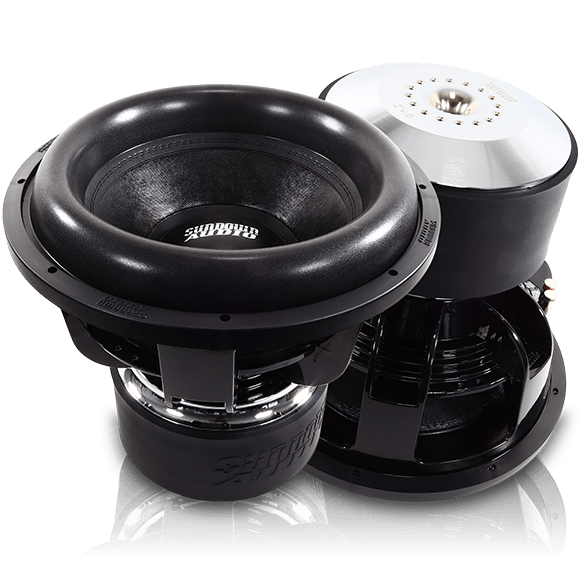
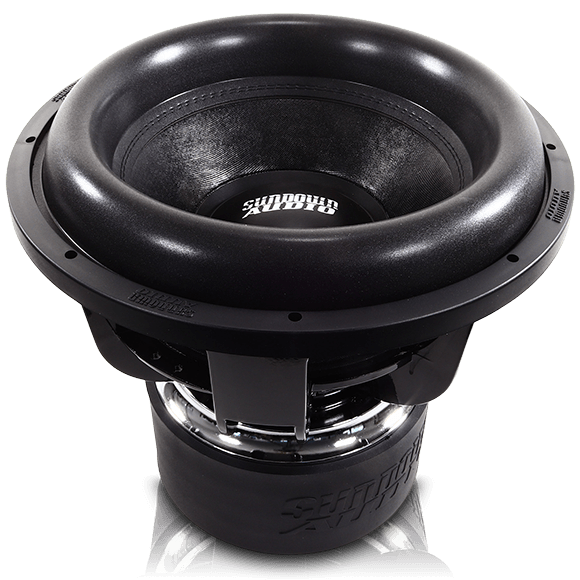
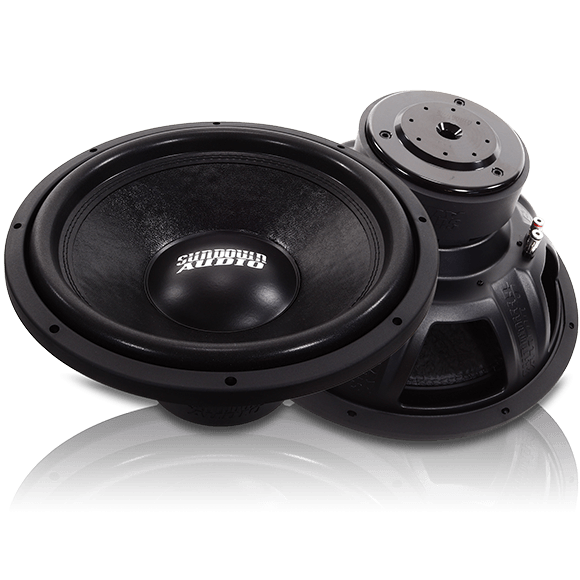
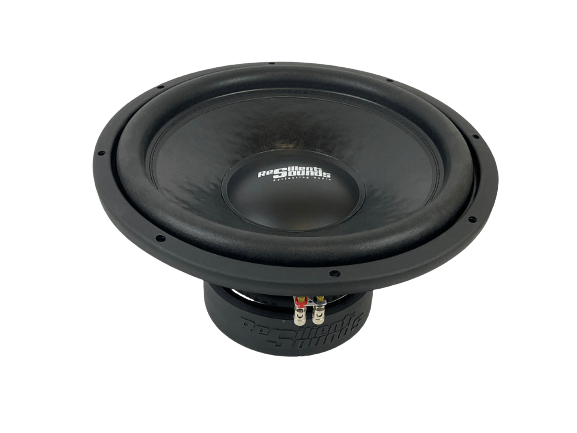
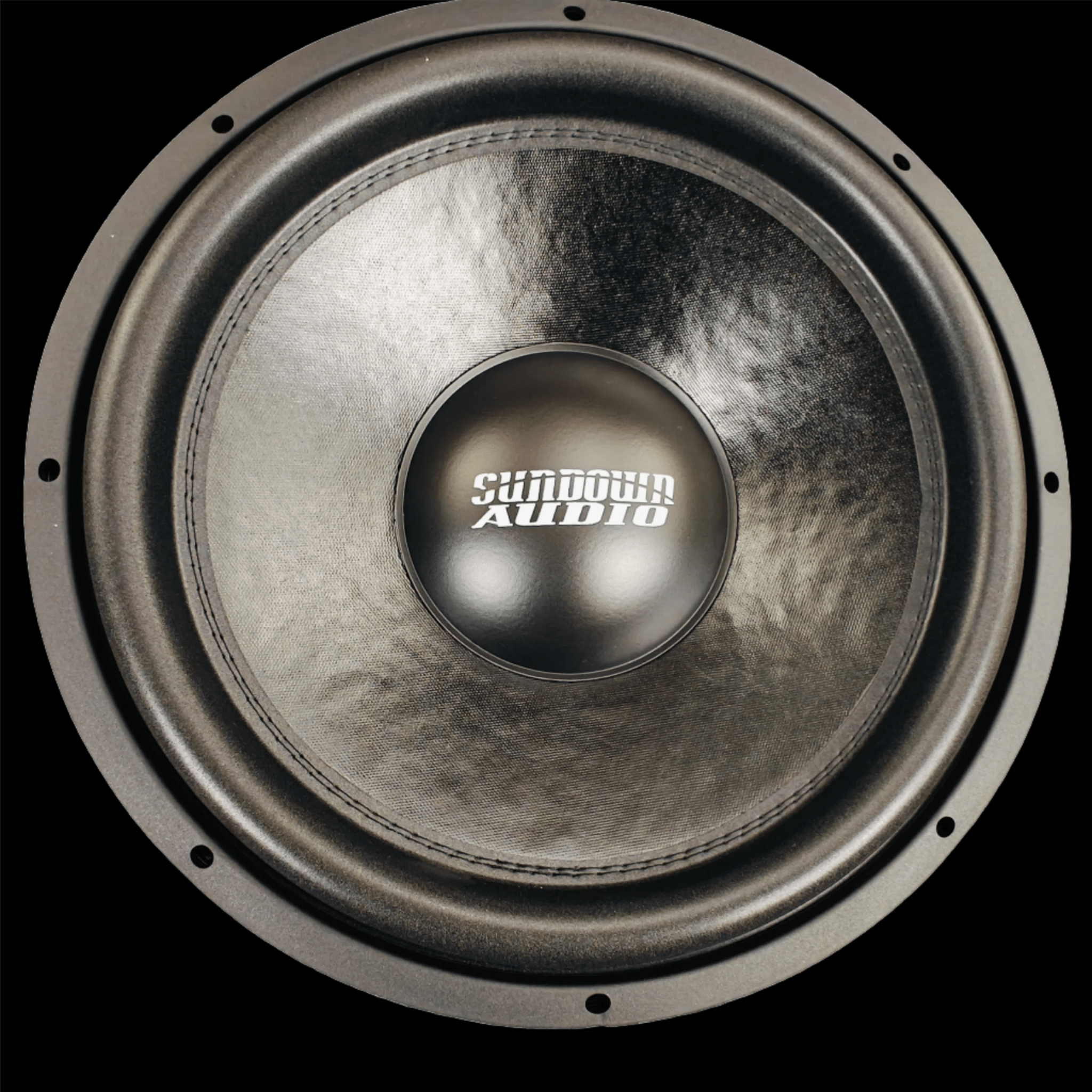
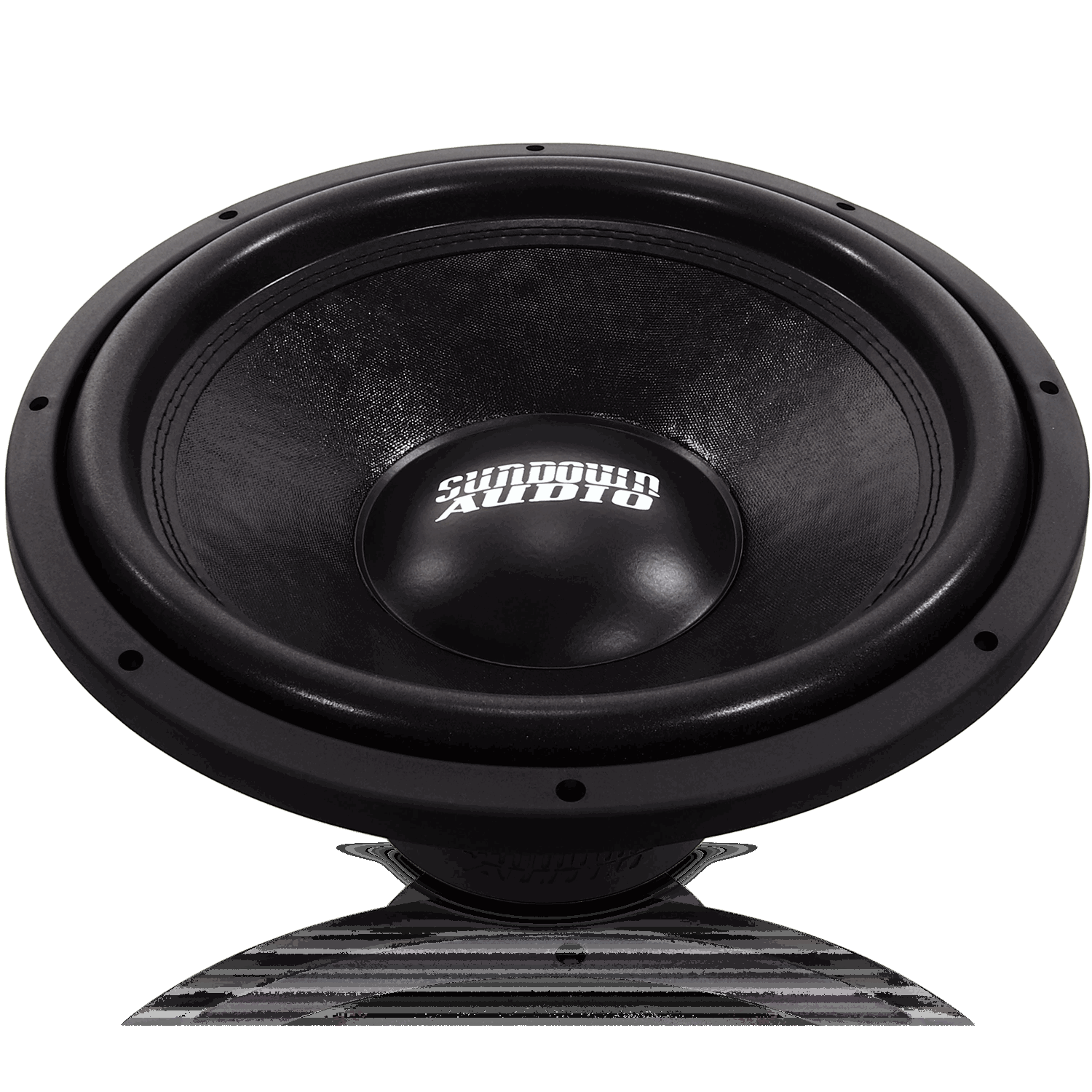
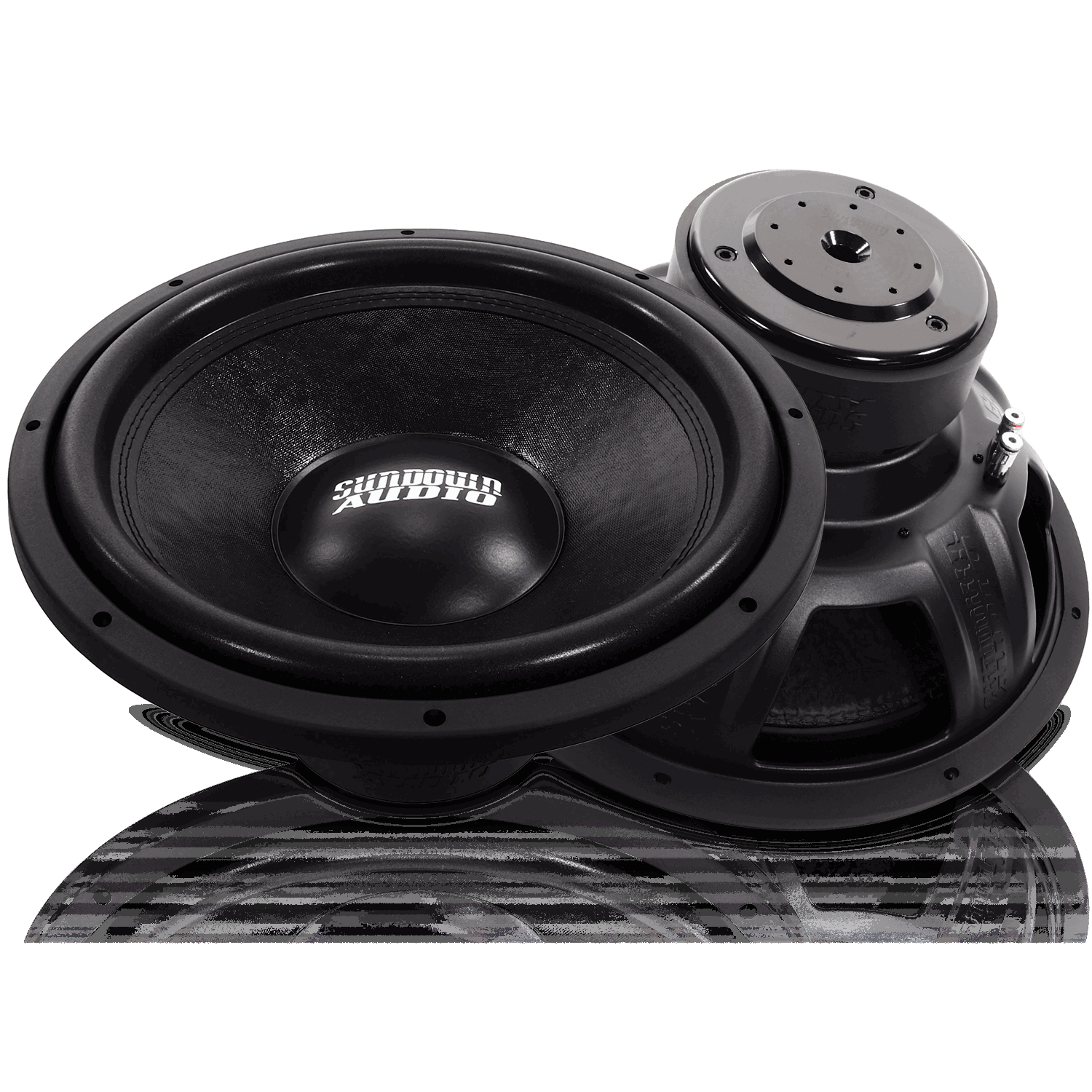
The 15-Inch Reality: When Cone Area Becomes the Argument
Step up from a 12-inch and the physics changes shape. A 12-inch driver is a scalpel — precise, articulate, perfectly sized for the typical vehicle's enclosure budget. A 15-inch is a sledgehammer. The argument for the 15-inch isn't "more bass." It's atmospheric displacement: cone area (Sd) multiplied by one-way excursion (Xmax) determines how much air the driver moves per stroke, and on the 15-inch platform that figure climbs by roughly 50% over a comparable 12.
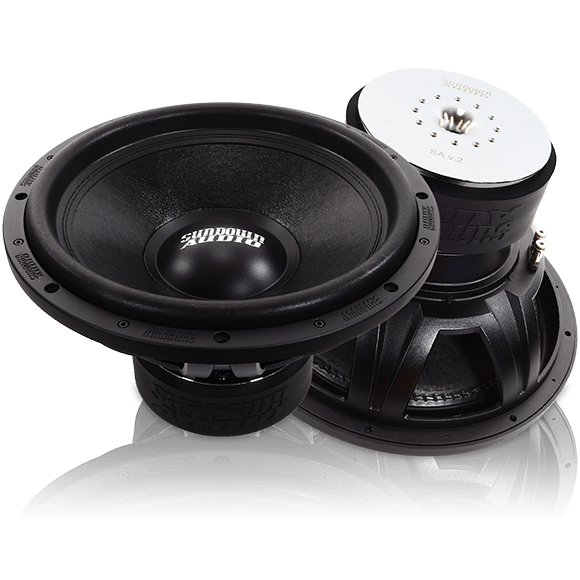
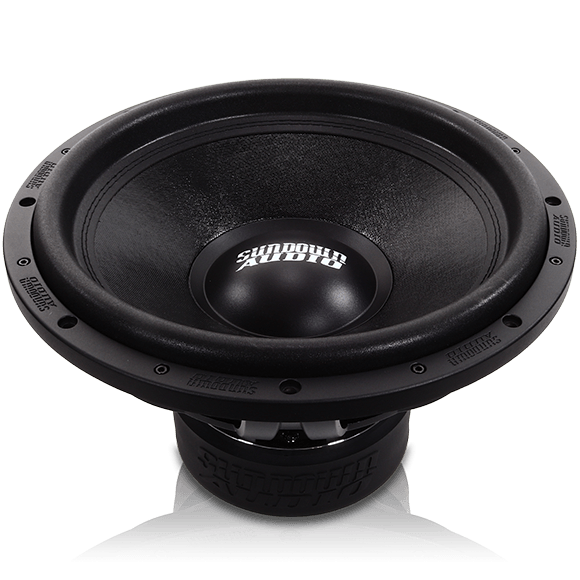
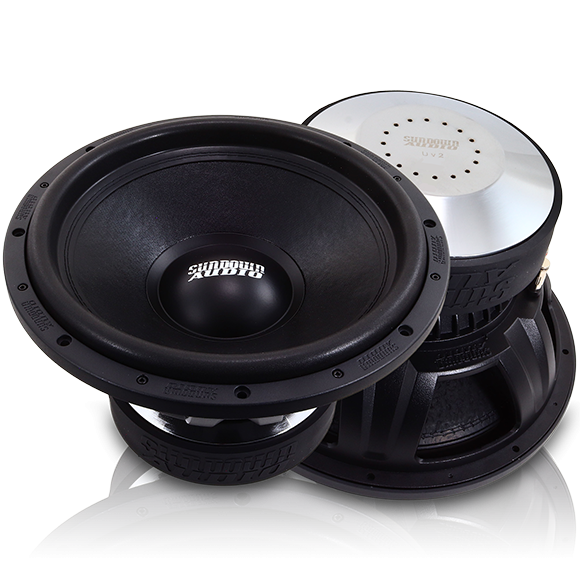
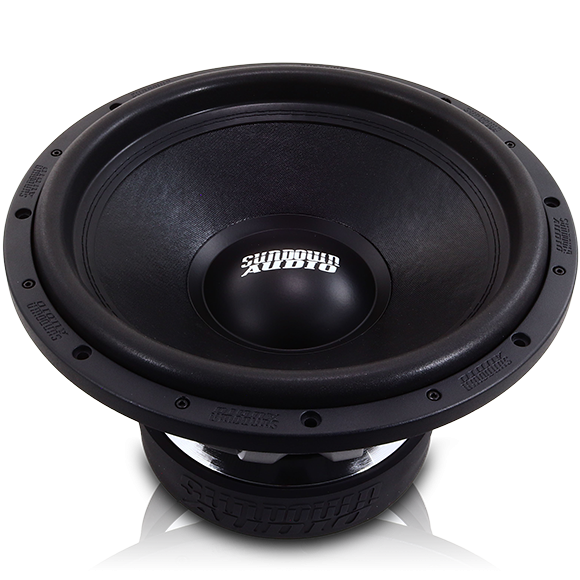
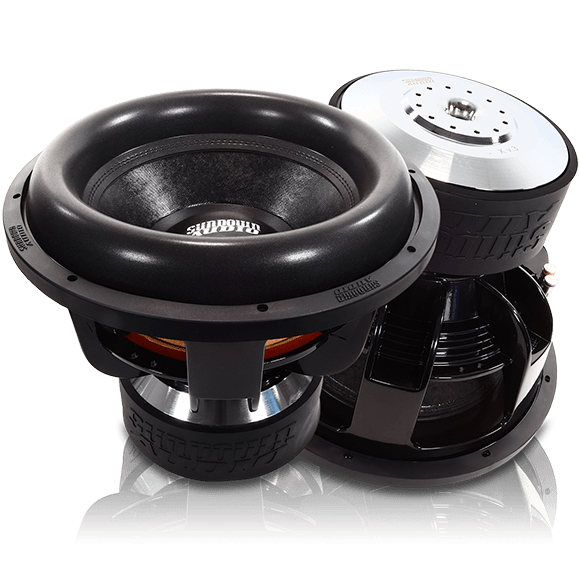
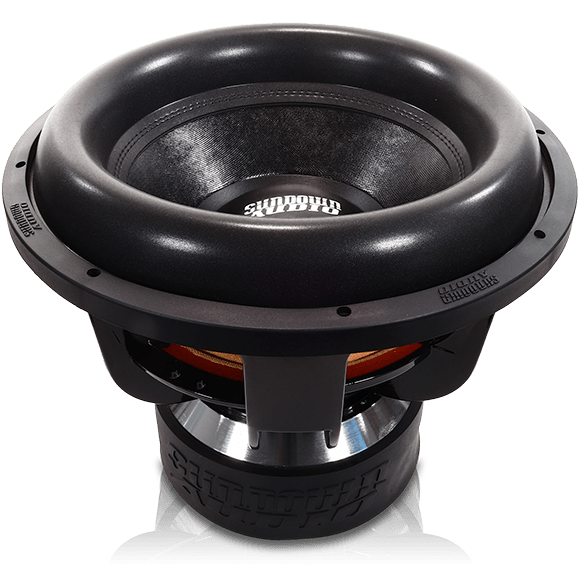
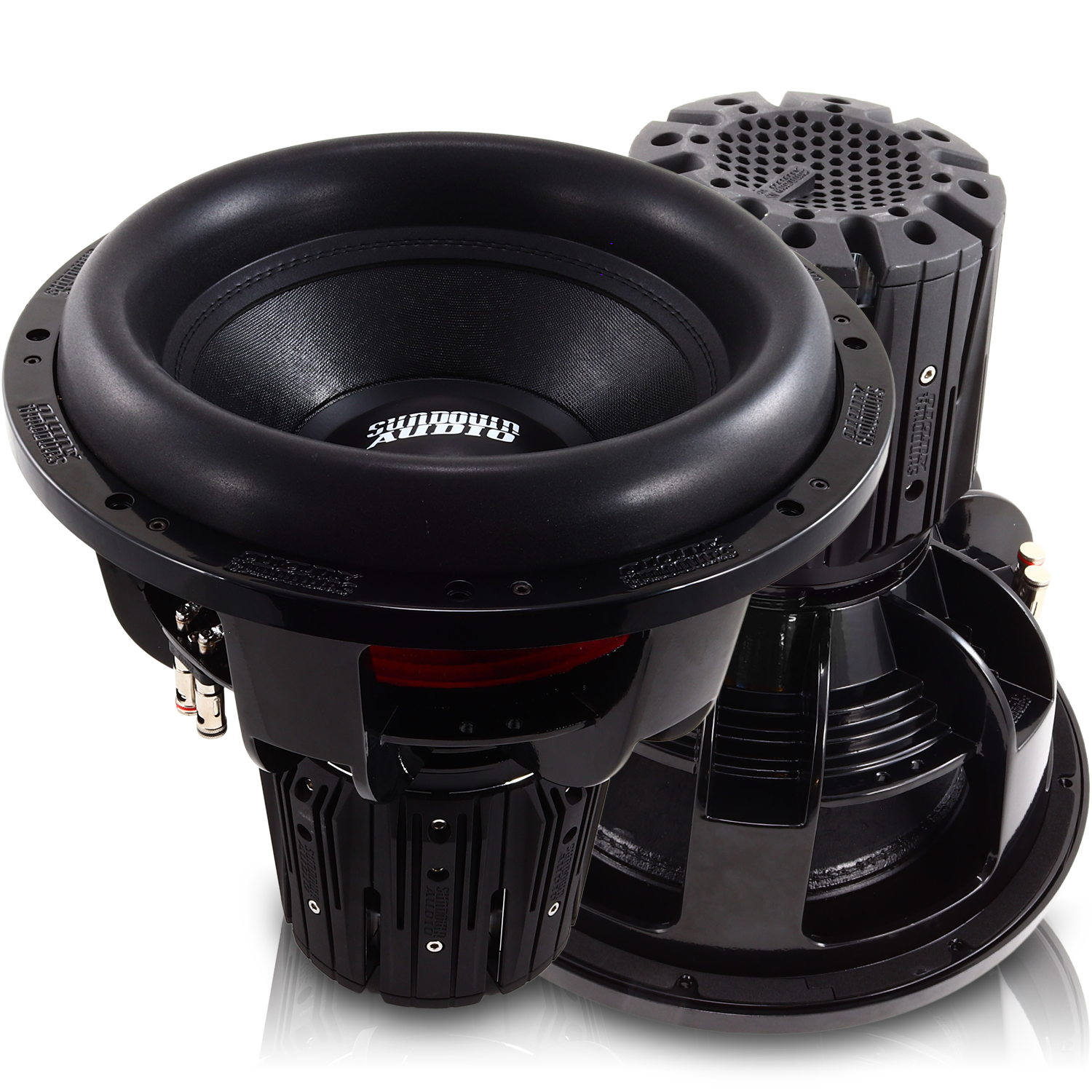
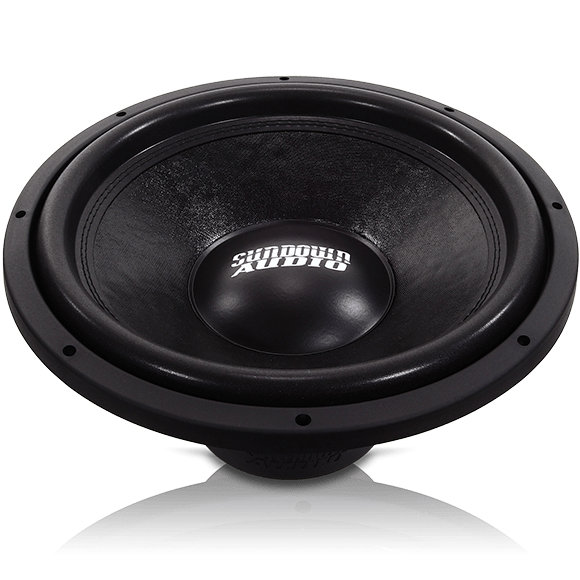
The trade-off is structural, not sonic. A 15-inch demands enclosure volumes nearly double the 12-inch's, mounting depths that compromise cargo geometry, and electrical headroom most factory systems can't deliver without modification. The reward — when the constraints are met — is sustained low-frequency output that no 12-inch can match at the same SPL target. This guide is built around the Sundown SA-15 v.2, which anchors the class with full Klippel measurement data, and the X-15 v.3, the competition-tier driver above it.
The SA-15 v.2: Why Klippel Numbers Anchor This Class
The SA-15 v.2 publishes a complete Thiele-Small parameter set under Klippel measurement — not estimated, not modeled. The numbers that matter:
- Fs: 36.84 Hz (D2) / 37.42 Hz (D4)
- Qts: 0.5245 (D2) / 0.6206 (D4)
- Vas: 51.94 L (D2) / 45.34 L (D4)
- Xmax: 19 mm one-way (~38 mm peak-to-peak)
- Re: 3.89 Ω (D2) / 5.83 Ω (D4)
- BL: 24.47 T·m (D2) / 29.16 T·m (D4)
- Mms: 388.97 g (D2) / 431.95 g (D4)
- Cms: 0.048 mm/N (D2) / 0.042 mm/N (D4)
Those Cms values look low if you've spent time around home-audio drivers. They aren't a defect — they're the design point. With 389 grams of moving mass and a BL product approaching 25 T·m, the suspension has to be stiff to keep the cone centered at rest and prevent rocking modes under transient load. We'll come back to this in Enclosure Physics below; the short version is that the suspension is matched to the driver, not loose.
Reading RMS Power Honestly — 15-Inch Edition
The same trap that catches 12-inch buyers catches 15-inch buyers harder, because the peak numbers are bigger. Peak power is what a driver survives in millisecond transients. RMS is what it dissipates continuously without burning the voice coil.
- SA-15 v.2: 1250 W RMS / 2500 W peak (Sundown re-rated; original sheet quoted 1000 W RMS)
- SA-15 v.3: 1500 W RMS / 3000 W peak (Xmax bumped from 19 mm to 22 mm one-way)
- X-15 v.3: 2500 W RMS / 5000 W peak (Xmax 30 mm one-way, ~60 mm peak-to-peak)
The same rule from the 12-inch class applies: pair the amplifier's RMS rating to 80–100% of the driver's RMS rating, on a clean signal. Underpowering an amp into clipping does more damage than running rated power cleanly. On the 15-inch class the "underpower" failure mode is more punishing because the cone has more mass to accelerate — clipped amplifier output translates to disproportionately worse cone control.
Enclosure Physics: The 15-Inch Mounting-Depth Reality
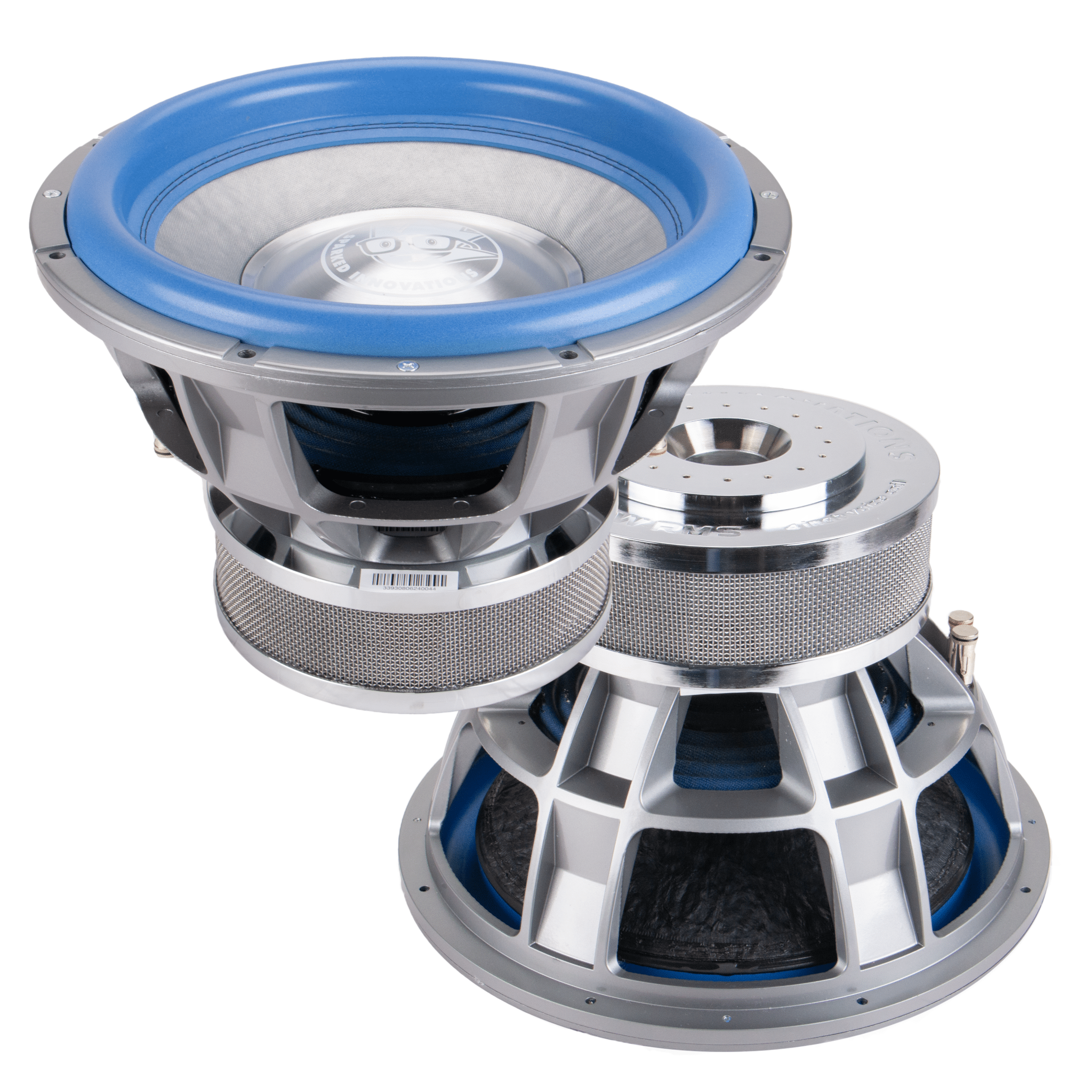
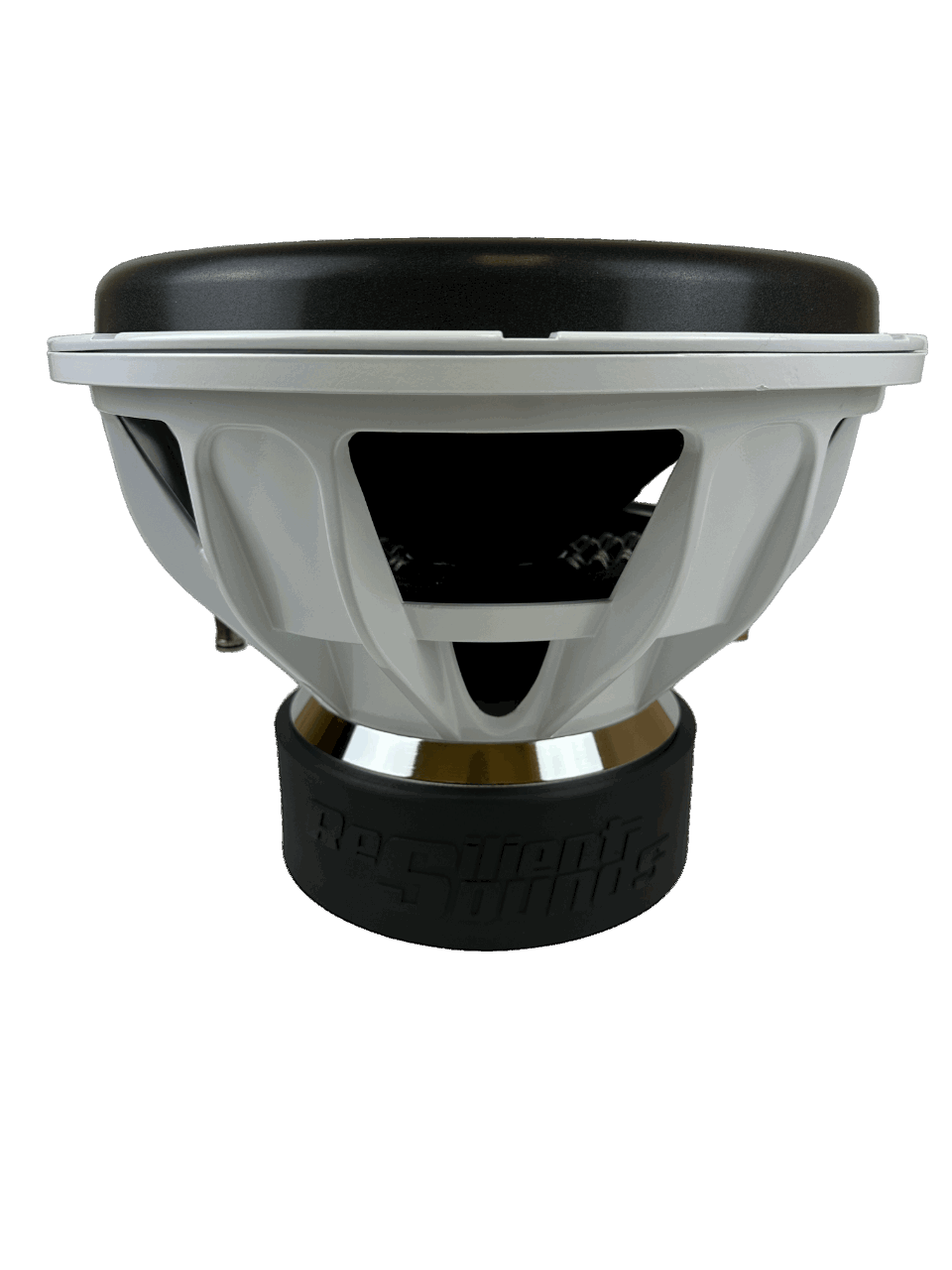
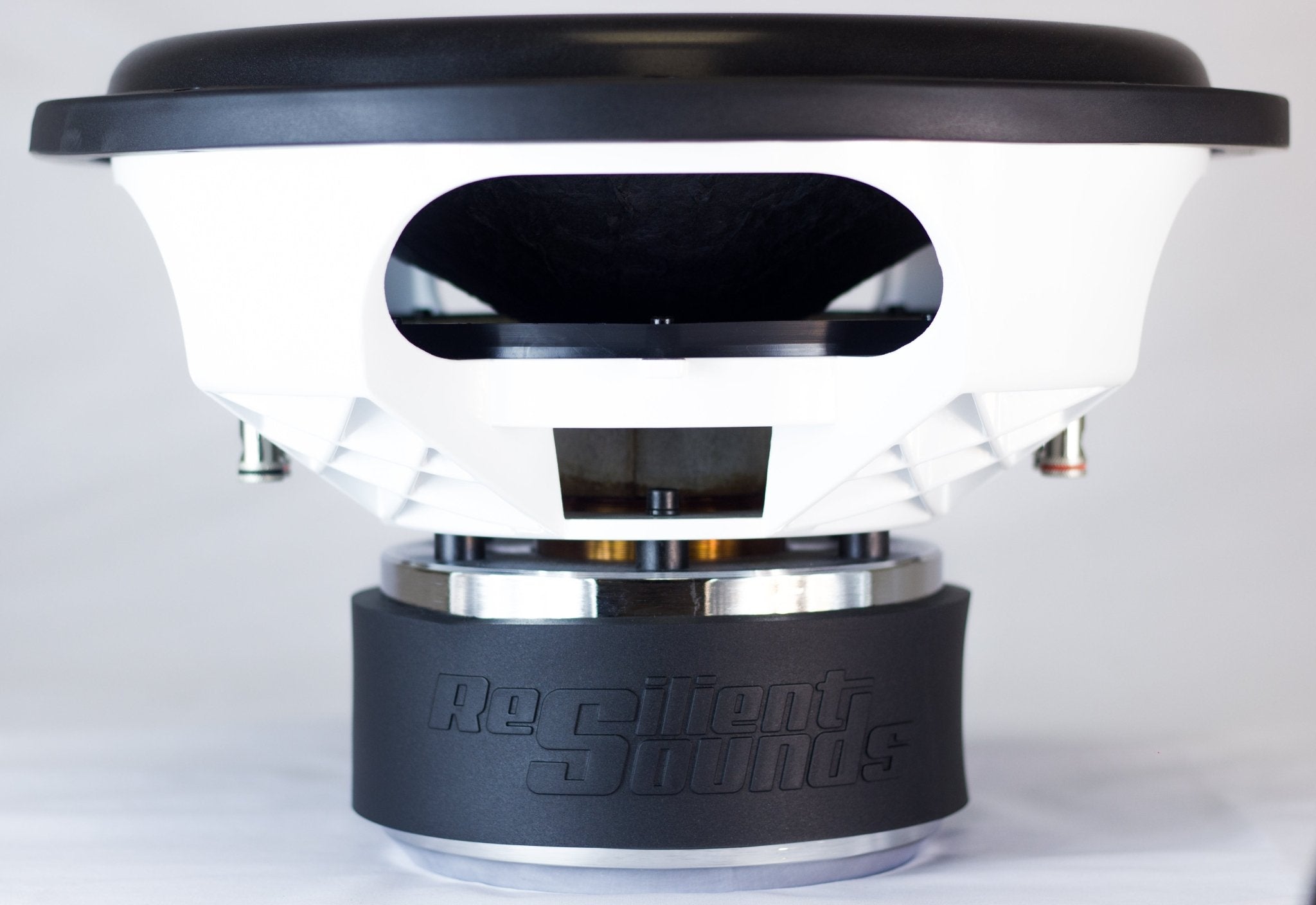
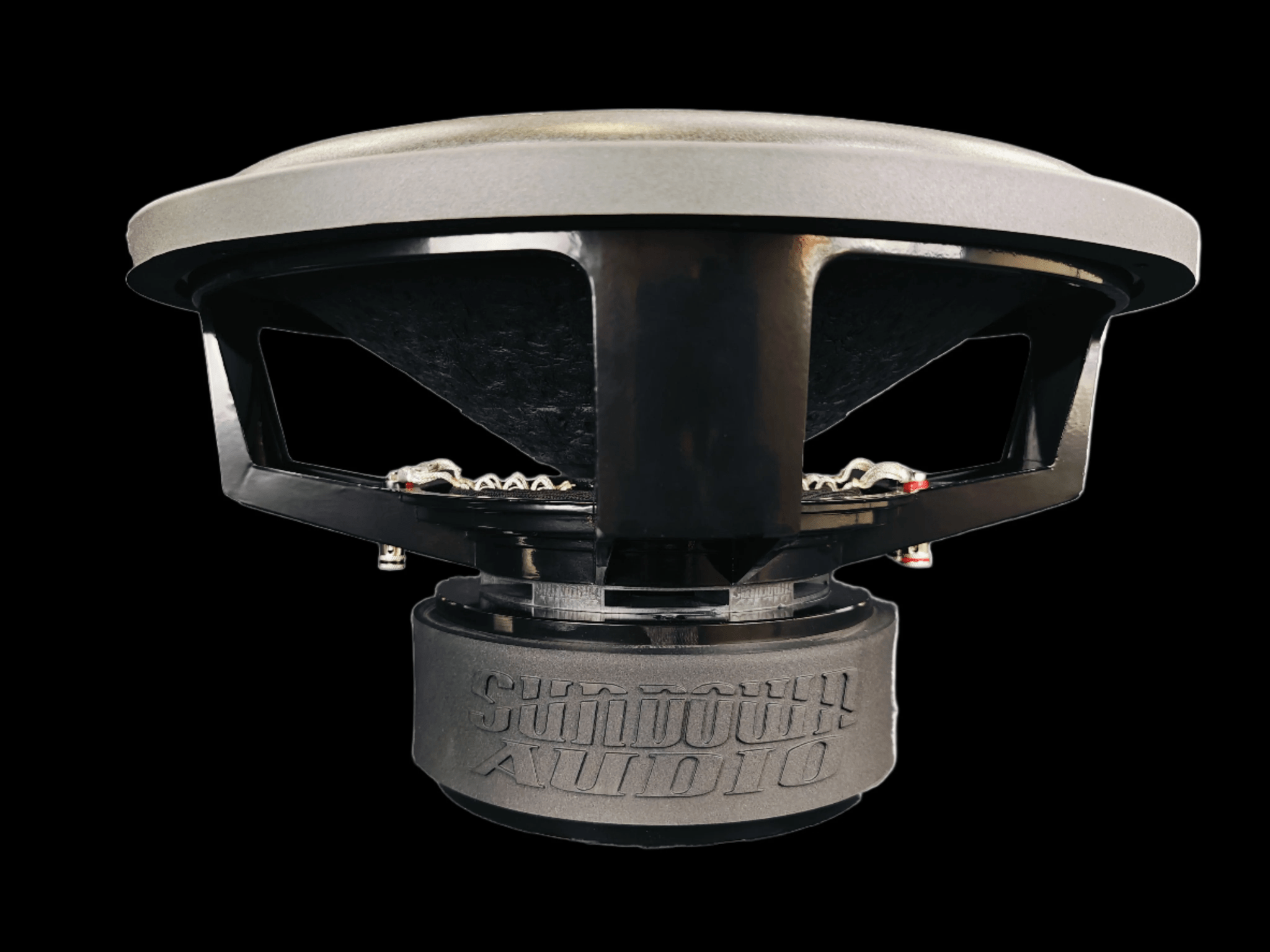
Most enthusiasts focus on cone area and ignore depth. The SA-15 v.2 measures 8.66 inches mounting depth — the distance from the gasket face to the back of the magnet. Behind that, the motor needs 1–2 inches of pole-vent clearance to breathe; choke the rear venting and the motor traps heat, voice coil resistance climbs, and power handling collapses. Total internal box depth needed at the mounting plane: roughly 10.5 inches minimum.
The Wedge-Box Trap. A common aftermarket wedge box runs 12″ at the deeper face and 8–9″ at the shallower face. The SA-15 mounted on the deeper face fits marginally; mounted on the shallower face, the motor cup hits the angled back wall before the flange seats. This is a mechanically impossible install, not a tight fit. The check: measure internal depth at the mounting plane specifically, not box average or external dimensions. Most prefab "shallow-mount" wedges fail this for 15-inch drivers regardless of marketing copy. Vertical-face or rectangular geometry is the safe default for SA-15 builds.
Sundown's official enclosure recommendation for the SA-15 v.2 is 3.5 cubic feet net ported, tuned to 35 Hz (F3 ≈ 28 Hz) or 2.0 cubic feet sealed. Three pieces of that recommendation matter:
- Net volume after motor displacement. A 15-inch motor displaces 0.18–0.25 cu ft inside the enclosure. A 4.0 cu ft external box drops to about 3.7 cu ft of usable air once the driver and bracing are accounted for, before you subtract the port. Always net-out before tuning.
- Stiff-Spider Physics. The 0.048 mm/N compliance is engineered to balance against the air-spring restoring force of a 3.5 cu ft sealed volume — a softer suspension would let the cone wander toward Xmech under sustained sub-30 Hz program material. The SA-15's combination of heavy moving mass, high BL, and stiff suspension is what produces controlled excursion at rated power, not a peak-power-only stunt.
- Tuning sets the output curve. 35 Hz is a daily-driver tune for the SA-15 — articulate, with usable output to ~28 Hz. Lower tunings (30 Hz, 28 Hz) trade midbass slam for low-end extension. Higher tunings (38–40 Hz) trade extension for cone control and louder bass-line response.
The Generation Question: SA-15 v.2 vs v.3
The SA-15 v.3 lifts power handling to 1500 W RMS / 3000 W peak and pushes one-way Xmax from 19 mm to 22 mm. The cone is heavier and the motor is more capable — same trajectory the SA-12 traveled between its v.2 and v.3. The practical consequence: the v.3 needs more amplifier current to deliver the same transient snap as a v.2 because the heavier moving mass has more inertia to overcome. It's not a drop-in replacement — it's a step-up that often pulls the rest of the system (amp, electrical) along with it.
Note on v.3 spec data: Sundown has not publicly published the full Thiele-Small parameter sheet for the SA-15 v.3 at the time of this guide. Recommended enclosure volumes for the v.3 should be confirmed against the cut-sheet directly from Sundown or an authorized dealer. We do not cite v.3-specific Fs, Qts, or Vas values here until those numbers are byte-verified against a manufacturer document.
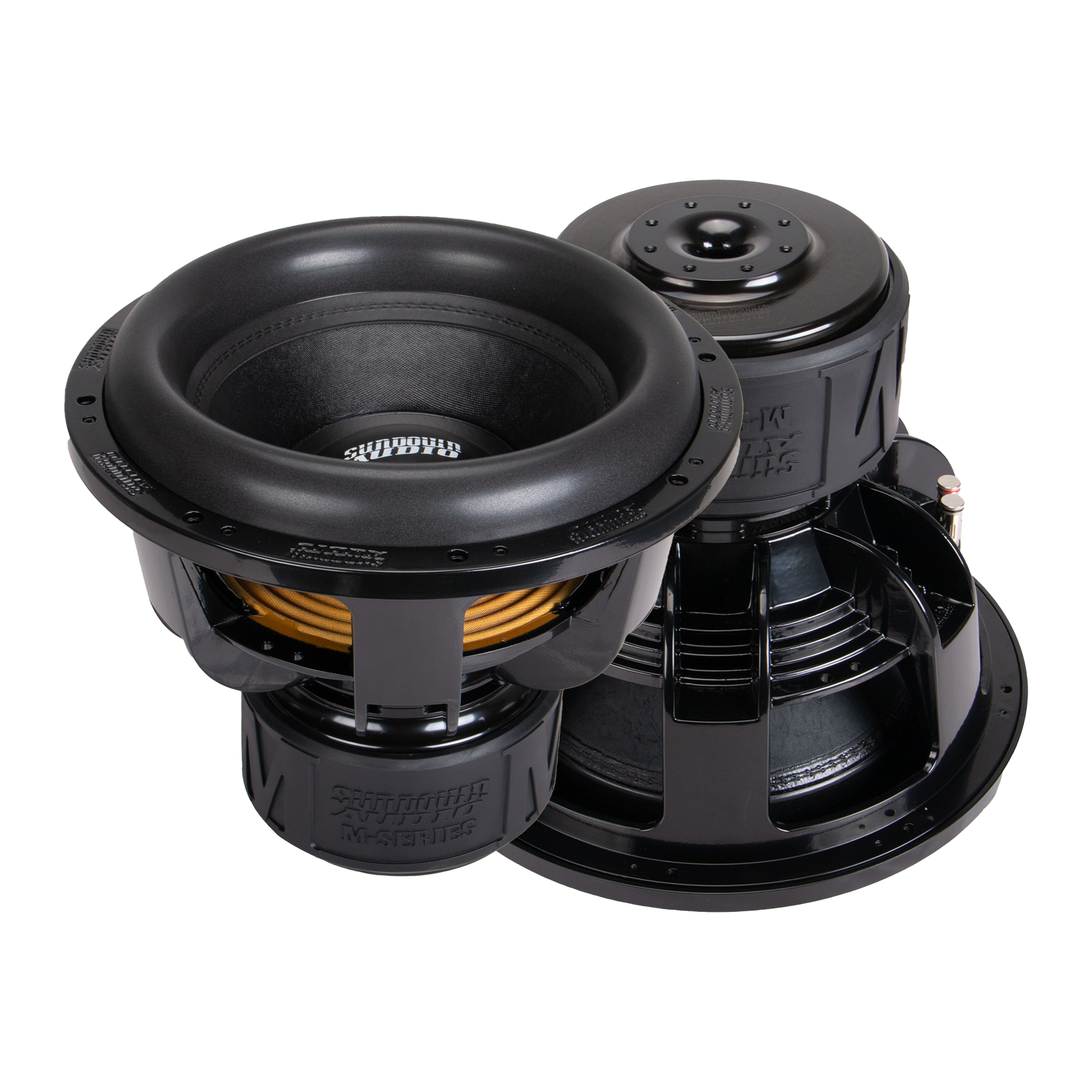
Competition Grade: The X-15 v.3 Air Mover
The X-Series steps the platform from "high-output daily" into competition SPL. The X-15 v.3 carries:
- 3-inch voice coil (vs the SA-Series' 2.75″) — more wire in the gap, more thermal mass, more sustained power handling
- 30 mm one-way Xmax (~60 mm peak-to-peak excursion)
- 2500 W RMS / 5000 W peak
- Triple-stacked magnet, 220 mm motor structure, hyper-extended pole, Mega-Roll v.2 surround
- Klippel-measured T/S (D2): Fs 31.42 Hz, Qts 0.468, Qes 0.561, Qms 2.801, Vas 45.92 L, Mms 423.4 g, BL 21.83 T·m, Cms 0.0606 mm/N, sensitivity 85.9 dB @ 1W/1m
Sundown's recommended enclosure for the X-15 v.3 is 4.25 cubic feet net ported, tuned to 32 Hz, with 68 square inches of port area and 0.22 cu ft of driver displacement. The 32 Hz tune (vs the SA-15's 35 Hz) reflects the v.3's lower Fs — the X-15 is engineered to play deeper, and the recommended box is sized to let it.
At this power level, the subwoofer is no longer the bottleneck — the electrical system is. A 2500 W RMS load on a 12V system pulls roughly 200 amps at peak draw. Stock alternators max out at 130–150 A and have no headroom for that. Plan for a high-output alternator, 1/0 AWG OFC power and ground runs, and a stabilization bank — either dual AGM or LTO (Lithium Titanate Oxide) cells. If your voltage drops below 12.5V at the amplifier under load, your electrical is the limit, not your sub.
Voice Coil Wiring: D1 vs D2 — Why X-Series Skips D4
The SA-Series ships in D2 / D4 (Dual 2-ohm, Dual 4-ohm) configurations. The X-Series ships in D1 / D2. The shift is intentional: X-Series owners run high-current monoblocks that publish their RMS rating at 1Ω or below, and lower-impedance coil options unlock that rated output without needing two subs to drop the load.
For a single SA-15 v.2 D2 (Dual 2-ohm):
- Series wiring = 4Ω load (mild)
- Parallel wiring = 1Ω load (full output on most monoblocks)
For a single X-15 v.3 D1 (Dual 1-ohm):
- Series wiring = 2Ω load (mild)
- Parallel wiring = 0.5Ω load — competition-grade-monoblock territory only. A 0.5Ω load presents roughly twice the current draw of a 1Ω load at the same voltage; consumer-tier monoblocks not rated for 0.5Ω will hit thermal protection or auto-attenuate within seconds. Do not wire a D1 sub parallel without a 0.5Ω-stable amplifier.
For two X-15 v.3 D1 subs in series-parallel (each sub wired internally as series, then both subs wired in parallel): 1Ω total — the standard X-Series competition configuration on a 1Ω-stable monoblock. The rule remains: pick the sub's coil configuration to match what the amplifier is rated for, not the other way around. Mismatching the load by half costs you half your power; mismatching by a factor of two on the wrong side costs you the amplifier.
Sources and Verification
The technical specs cited above are sourced from Sundown Audio's published product pages and the Klippel measurement sheets reproduced by authorized dealers (WoofersEtc for the SA-15 v.2 enclosure and Klippel mirror, VexProAudio for the X-15 v.3 cross-verified Klippel). Enclosure recommendations are anchored on Sundown's official spec sheets. Power and excursion figures reflect Sundown's current published ratings; older retail listings may show pre-rerating values for both the SA and X series.
What this guide deliberately doesn't cite
We don't publish numbers we can't verify. Specifically:
- SA-15 v.3 Thiele-Small parameters — Sundown has not publicly published the full T/S sheet for the v.3. We cite the v.3's published headline specs (1500 W RMS, 22 mm Xmax, 2.75″ voice coil) but not Fs, Qts, or Vas values until a manufacturer cut-sheet confirms them.
- X-15 v.3 sealed enclosure volume — Sundown publishes the X-15 v.3 ported recommendation but not a sealed alignment. Sealed builds for the X-Series should be confirmed against Sundown directly via an authorized dealer.
- X-15 v.4 — no manufacturer specifications are currently available for a v.4 X-15. References to "v.4" in third-party catalog listings may indicate other line members (XV4 series) and should not be presumed to refer to a successor X-15.
If you're building for a configuration we haven't verified, reach out to Sundown Audio directly or contact us for an authorized-dealer consultation.